
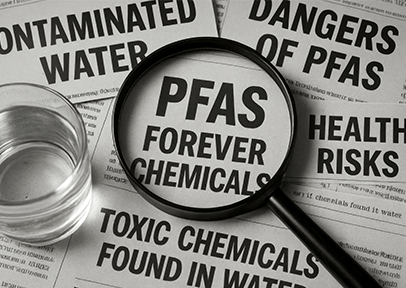
Insurance archaeology and historical insurance recovery can identify historical liability insurance that may provide funding for PFAS contamination, groundwater remediation, and long-tail environmental liability claims.
By: James Pawlish
Environmental contamination from PFAS chemicals, solvent releases from dry cleaners, and industrial operations often create significant financial challenges for property owners, municipalities, and businesses.
These liabilities can also affect property transactions, redevelopment financing, and lending decisions when environmental risk becomes tied to the value of a property or business.
Cleanup obligations may arise decades after contamination first occurred, and remediation costs can easily reach millions of dollars. These liabilities are frequently discovered during property or business transactions, due diligence such as Phase I or Phase II Environmental Site Assessments, redevelopment planning, or regulatory investigations and enforcement actions.
Many organizations do not realize that historical insurance policies issued decades ago may still provide coverage for environmental liabilities today. When these policies are identified and reconstructed, they can provide important financial resources for environmental cleanup and legal defense.
For property owners, business owners, environmental attorneys, real estate developers, environmental consultants, latent injury attorneys, municipalities, and financial institutions, historical insurance recovery can be a critical source of environmental remediation funding.
PFAS Insurance Coverage: How Historical Policies May Fund PFAS Cleanup
PFAS (per- and polyfluoroalkyl substances) contamination has emerged as one of the most significant environmental issues in the United States. These “forever chemicals” were widely used for decades in firefighting foam, industrial manufacturing, textiles, and consumer products. As regulatory scrutiny continues, PFAS contamination in soil and groundwater is triggering costly investigations and remediation obligations across the country.
Many of these releases occurred during periods when commercial general liability policies provided broader pollution coverage than modern policies. Policies issued prior to the mid-1980s often did not contain the absolute pollution exclusions commonly found in later insurance policies.
However, coverage is not limited only to policies issued before the mid-1980s. The availability of insurance coverage ultimately depends on the specific policy language and the law governing its interpretation. In some jurisdictions, courts have held that ambiguous policy language must be interpreted in favor of the policyholder. As a result, policies issued after the introduction of pollution exclusions may still provide coverage depending on how courts interpret the policy language.
For organizations facing PFAS cleanup obligations today, identifying historical insurance coverage across multiple policy periods can help reduce financial exposure.
Groundwater Contamination and Environmental Liability Claims Can Trigger Multiple Policies
Environmental contamination rarely occurs at a single moment. Instead, it typically develops gradually as pollutants migrate through soil and groundwater over time. Because of this, groundwater contamination and environmental liability claims can involve multiple insurance policies across multiple policy periods.
Industries commonly associated with long-tail environmental exposure include dry cleaning operations using PCE and TCE solvents, manufacturing and industrial facilities, municipal landfills and waste disposal sites, airports and firefighting training facilities, and chemical processing operations. When contamination spans decades, multiple insurance carriers and policy years may be relevant. This can create substantial available coverage for environmental liability claims.
For dry cleaners, property owners, and municipalities dealing with groundwater contamination today, historical liability insurance may represent a significant and often overlooked financial resource.
Potentially Responsible Party Investigations and Insurance Allocation
Environmental contamination often involves more than one responsible party. Former owners, operators, tenants, waste generators, or transporters may all have contributed to contamination at a site.
As a result, environmental liability investigations frequently include identifying Potentially Responsible Parties (PRPs) and evaluating responsibility among them.
A PRP investigation can uncover prior property owners, former operators, or industrial tenants whose activities contributed to contamination. Once those parties are identified, their historical insurance coverage may become relevant in evaluating potential sources of funding for remediation and defense costs.
For example, a contaminated property may have been owned or operated by several companies over multiple decades. Each of those entities may have maintained liability insurance policies that could respond to environmental claims arising from their period of operation.
Identifying potentially responsible parties and their insurance coverage helps clarify which parties, operations, and policy periods may be relevant. This process can expand the pool of available funding for remediation while also helping insurers evaluate responsibility across multiple policyholders, carriers, and years of coverage.
For environmental attorneys, consultants, municipalities, financial institutions, and insurers, PRP investigations combined with insurance archaeology and historical insurance research often play a critical role in identifying potentially relevant parties and insurance coverage that may contribute to cleanup costs.
Example: When a Property Transaction Reveals PFAS Contamination
Consider a property owner preparing to sell a commercial or industrial property. As part of the buyer’s due diligence process, a Phase I Environmental Site Assessment identifies the potential for PFAS contamination based on historical operations at the site. Further investigation may be recommended, and testing may confirm PFAS impacts to soil or groundwater. At that point, the transaction can become significantly more complex. Buyers, lenders, and regulators may require investigation and remediation before the deal can proceed.
In many cases, the contamination originated decades earlier under prior ownership or during historical industrial operations. Those former owners or operators may have maintained commercial general liability insurance policies during the years when the releases occurred.
Through insurance archaeology, it may be possible to identify and reconstruct historical insurance policies tied to earlier operations. When coverage is confirmed, those policies may help fund environmental investigation, remediation costs, and legal defense related to PFAS or groundwater contamination claims. In some transactions, identifying insurance coverage can help offset remediation costs that might otherwise prevent a deal from moving forward. For property owners, environmental consultants, and real estate attorneys, uncovering historical insurance can significantly change the financial outcome of a transaction involving contaminated property.
Insurance Archaeology and Locating Lost Insurance Policies
One of the biggest challenges in environmental insurance recovery is that many historical policies are no longer readily available. Businesses often retained insurance records for only a limited period, and corporate reorganizations, mergers, and relocations frequently resulted in lost documentation.
Insurance archaeology is the process of locating proofs of the existence, terms, and conditions of lost or mislaid policies. It also involves reconstructing historical insurance coverage through archival research and secondary documentation. Even when the original policy cannot be located, secondary evidence can often establish the existence and terms of historical coverage. Through careful historical insurance research, it is frequently possible to reconstruct insurance programs that were placed decades earlier and identify policies that may respond to environmental liabilities today.
For property owners, municipalities, and lenders evaluating environmental risk, locating lost insurance policies can provide important insight into the potential insurance resources available for a contaminated property.
Environmental Remediation Funding Through Historical Insurance
Environmental remediation frequently involves substantial costs, including site investigations, groundwater treatment systems, soil excavation, and long-term monitoring required by environmental regulators.
Occurrence-based historical liability insurance policies may provide environmental remediation funding for many of these expenses. Depending on the policy language and the law governing the claim, insurance coverage may apply to certain cleanup-related costs, property damage claims, legal defense expenses, and environmental settlements. For contaminated properties undergoing investigation or redevelopment, historical insurance coverage can become an important financial resource when evaluating how remediation work may be funded.
Environmental consultants, attorneys, and property owners often investigate historical insurance as part of a broader strategy for understanding environmental liability and potential funding resources.
Historical Insurance Recovery for Property Owners, Municipalities, and Financial Institutions
Environmental contamination can significantly affect property value, redevelopment plans, and financial risk. Historical insurance recovery can provide important financial resources for a wide range of stakeholders.
- Property owners and developers may be able to use historical insurance coverage to support remediation efforts and facilitate redevelopment projects.
- Dry cleaners and small businesses often face historic solvent releases that may be covered under historical liability policies.
- Municipalities may have coverage for environmental exposure related to landfills, wastewater facilities, and firefighting foam use.
- Environmental attorneys may rely on insurance archaeology to identify historical policies that may support environmental liability claims and related litigation.
- Financial institutions may benefit from identifying insurance coverage that helps offset environmental remediation risks associated with contaminated properties.
PFAS Insurance Coverage and Funding for Groundwater Cleanup May Already Exist
Environmental contamination from PFAS groundwater impacts, historic dry-cleaning operations, or industrial pollution often originates decades in the past. Fortunately, the insurance policies issued during those same decades may still provide valuable financial protection.
For organizations facing environmental liability claims, historical insurance investigations may identify liability insurance policies that may support PFAS claims, groundwater cleanup, environmental remediation, contamination claims, and legal defense costs.
These policies can represent significant financial assets that may help support environmental cleanup and address long-tail environmental liabilities.
Explore Whether Historical Insurance Coverage Exists
If your organization is facing PFAS contamination, groundwater remediation obligations, or other environmental liability claims, historical insurance policies may provide a critical source of funding.
Organizations addressing environmental liabilities often begin by investigating whether historical insurance coverage exists for prior owners, operators, or historic operations at the site. Identifying these policies can help evaluate the financial resources that may be available for environmental remediation and legal defense.
PolicyFind assists clients with insurance archaeology and historical insurance recovery, helping locate and reconstruct historical occurrence-based liability insurance policies that may contribute to environmental cleanup funding and long-tail environmental liability claims.